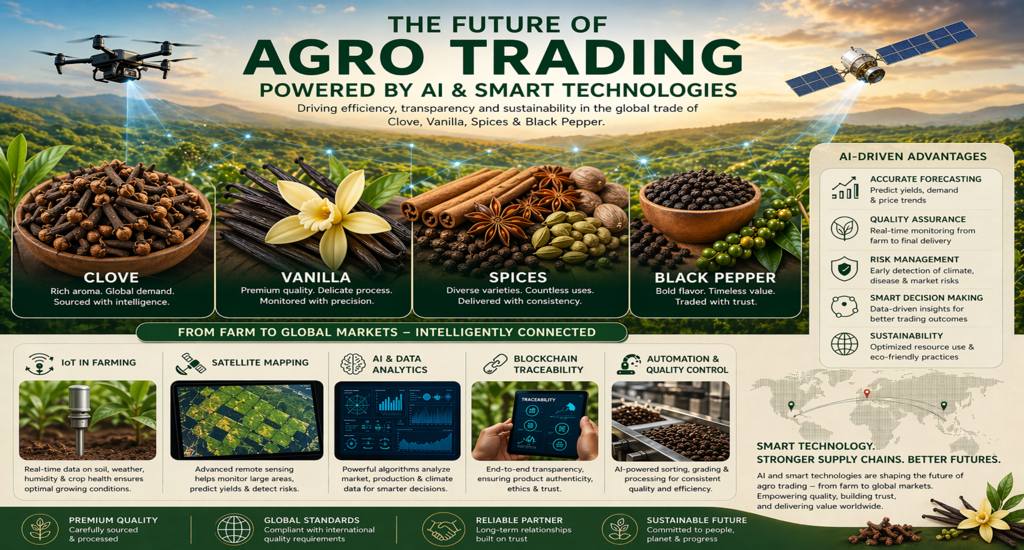
The global trade of high-value agricultural commodities such as clove, vanilla, spices, and black pepper has long been shaped by factors like climate conditions, regional expertise, and fluctuating market demand. These products are not only essential ingredients in culinary traditions worldwide but also play a significant role in pharmaceuticals, cosmetics, and food processing industries. However, the agro trading landscape for these commodities is becoming increasingly complex due to climate variability, supply chain inefficiencies, and rising demand for quality and traceability.
In this evolving environment, Artificial Intelligence (AI) and associated technologies are emerging as transformative forces. By integrating AI with tools such as IoT (Internet of Things), satellite mapping, and blockchain, agro trading companies are gaining unprecedented control over production, quality, and distribution processes. These innovations are enabling more accurate forecasting, improved traceability, and enhanced efficiency across the value chain.
For Robust Madagascar, which operates in the global trade of premium agricultural commodities, adopting these technologies is a strategic move toward building a more resilient, transparent, and future-ready business model. This article explores how AI is reshaping the trade of clove, vanilla, spices, and black pepper, and how these advancements are driving the next phase of agro trading.
AI in Commodity-Specific Agro Trading
Each agricultural commodity has unique characteristics, and AI plays a crucial role in addressing these differences. Clove, vanilla, spices, and black pepper are particularly sensitive to environmental conditions, making them ideal candidates for AI-driven optimization.
AI systems analyze multiple variables to enhance production and trading efficiency, including:
- Climate conditions such as rainfall, humidity, and temperature
- Soil health and nutrient composition
- Historical yield data and crop cycles
- Market demand and global consumption patterns
For example, vanilla cultivation requires highly specific climatic conditions and careful pollination processes. AI can monitor these factors and provide recommendations to farmers, ensuring consistent quality and yield. Similarly, black pepper production depends heavily on soil moisture and disease control, both of which can be optimized through AI-driven insights.
For Robust Madagascar, this means improved sourcing strategies and better alignment with global demand. By leveraging AI, the company can ensure that each commodity meets international quality standards while maintaining supply consistency.
IoT in Spice Cultivation: Real-Time Monitoring for Quality Assurance
The Internet of Things (IoT) is playing a vital role in enhancing the cultivation of clove, vanilla, spices, and black pepper. IoT devices collect real-time data from farms, enabling farmers and traders to monitor conditions continuously and make informed decisions.
In spice cultivation, IoT applications include:
- Soil sensors that track moisture levels, ensuring optimal irrigation for crops like black pepper
- Climate monitoring systems that help maintain ideal conditions for vanilla curing and drying
- Smart irrigation systems that reduce water wastage while improving crop health
- Post-harvest monitoring tools that track storage conditions for cloves and spices
These technologies ensure that crops are grown and processed under optimal conditions, preserving their aroma, flavor, and quality. For high-value commodities like vanilla and clove, even minor variations in quality can significantly impact market value.
For Robust Madagascar, IoT enables better quality control at the source, reducing the risk of inconsistencies and ensuring that products meet the expectations of global buyers.
Satellite Mapping: Managing Large-Scale Spice Production
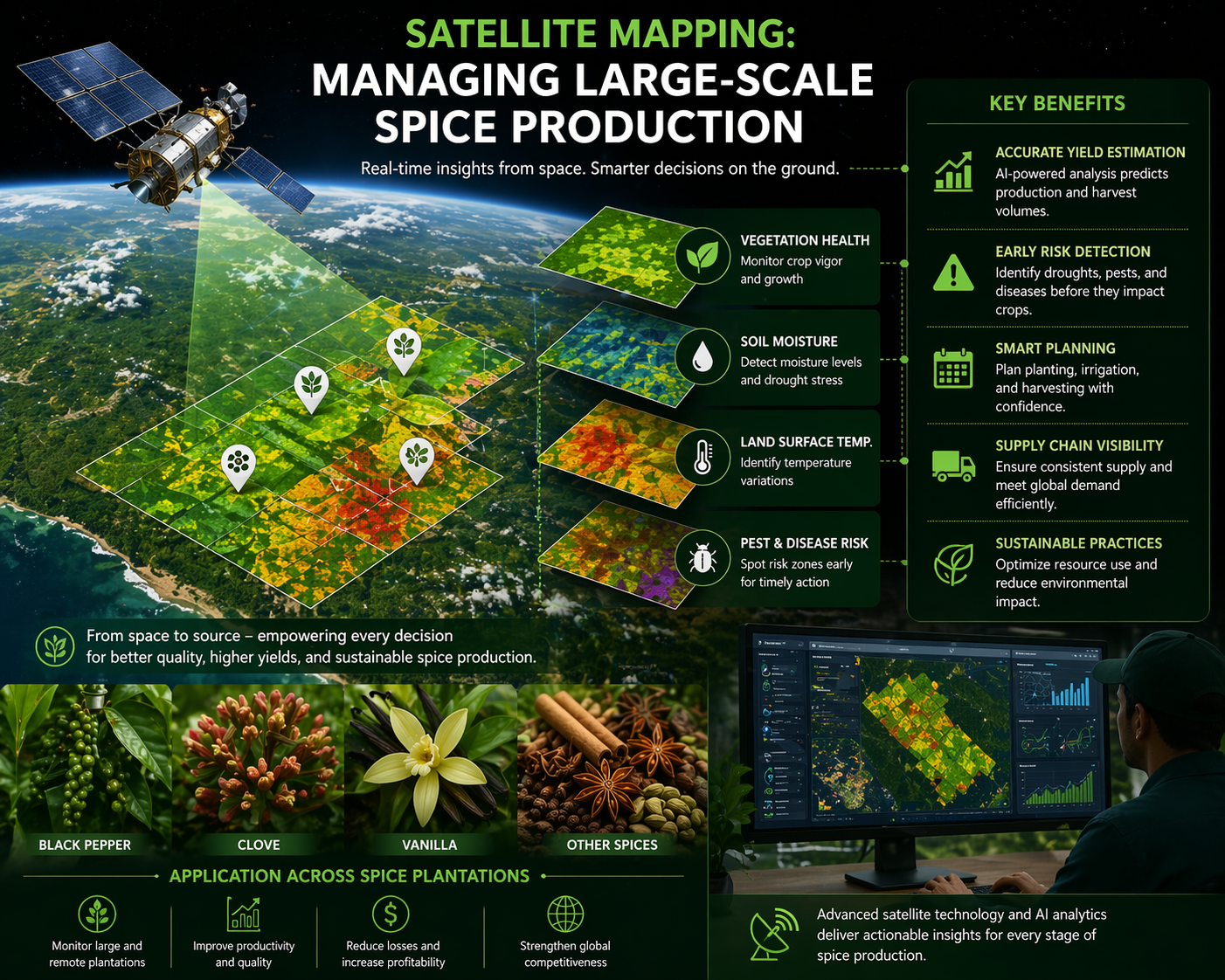
Satellite mapping and remote sensing technologies provide a macro-level view of agricultural production, which is particularly useful for commodities grown across large and diverse regions. Clove and vanilla plantations, for instance, are often spread across different climatic zones, making it challenging to monitor them effectively through traditional methods.
Satellite data allows agro trading companies to:
- Monitor crop health across entire regions
- Detect early signs of drought, pests, or disease
- Estimate yields for clove, black pepper, and other spices
- Track seasonal variations and predict harvest timelines
When combined with AI, satellite imagery can be analyzed to generate accurate forecasts and actionable insights. This enables companies like Robust Madagascar to plan procurement strategies more effectively and respond proactively to potential supply disruptions.
By having a comprehensive view of production across regions, the company can ensure a stable supply of high-quality spices, even in the face of environmental challenges.
Precision Agriculture for High-Value Spices
Precision agriculture is particularly beneficial for high-value commodities like vanilla and clove, where quality and consistency are critical. By integrating AI, IoT, and satellite data, precision agriculture enables farmers to optimize every aspect of cultivation.
This approach ensures that:
- Crops receive the exact amount of water and nutrients required
- Diseases and pests are detected and managed early
- Harvesting is done at the optimal time for maximum quality
For spices like black pepper, precision agriculture can significantly improve yield and reduce losses caused by pests or unfavorable conditions. Similarly, for vanilla, it can enhance the curing process, which is essential for developing its characteristic flavor and aroma.
For Robust Madagascar, precision agriculture translates into a more reliable supply chain and higher-quality products. This not only strengthens the company’s market position but also builds trust with international buyers.
Blockchain in Spice Trading: Ensuring Authenticity and Traceability
Traceability is a critical factor in the global trade of spices, especially for premium products like vanilla and clove. Buyers increasingly demand transparency regarding the origin, quality, and handling of these commodities. Blockchain technology provides a solution by creating a secure and transparent record of the entire supply chain.
With blockchain, every stage of the product journey is recorded, including:
- Farm origin and cultivation practices
- Harvesting and processing details
- Storage and transportation conditions
- Final delivery to buyers
This level of transparency ensures authenticity and helps prevent fraud, which is a significant concern in the spice trade. For example, vanilla is one of the most expensive spices in the world, making it susceptible to adulteration and counterfeit products.
For Robust Madagascar, blockchain enhances credibility and allows the company to offer verifiable proof of product quality and origin. This builds trust with buyers and strengthens long-term business relationships.
AI in Market Forecasting for Spices and Commodities
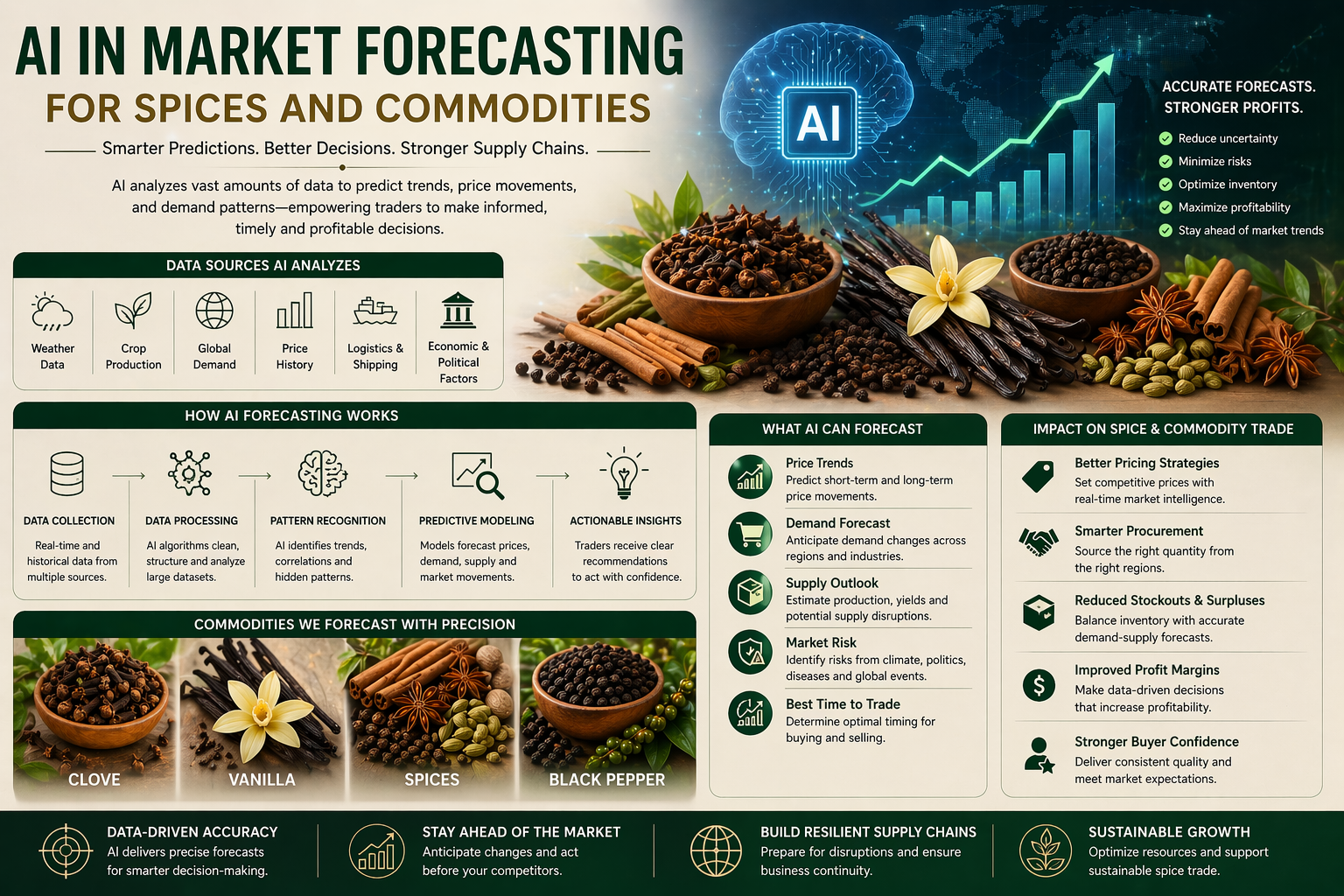
The global market for clove, vanilla, spices, and black pepper is highly dynamic, influenced by factors such as weather conditions, production levels, and changing consumer preferences. AI plays a crucial role in analyzing these variables and predicting market trends.
AI-driven forecasting enables companies to:
- Anticipate price fluctuations for spices and commodities
- Identify emerging market trends and demand patterns
- Optimize inventory and distribution strategies
- Reduce financial risks associated with market volatility
For Robust Madagascar, this means making more informed trading decisions and maintaining a competitive edge in global markets. By leveraging AI, the company can respond quickly to changes in demand and ensure that it remains aligned with market needs.
Automation and Post-Harvest Processing
Post-harvest processing is a critical stage in the spice trade, as it directly affects product quality. AI-powered automation is transforming this stage by improving efficiency and consistency.
In the context of spices, automation can be used for:
- Sorting and grading cloves, black pepper, and other spices
- Monitoring drying and curing processes for vanilla
- Packaging and labeling products for export
These technologies reduce human error and ensure that products meet international quality standards. For high-value commodities, maintaining consistent quality is essential for building a strong brand reputation.
For Robust Madagascar, automation enhances operational efficiency and ensures that products are delivered in optimal condition.
Sustainability in Spice Production
Sustainability is becoming increasingly important in the global spice trade. Consumers and buyers are looking for products that are not only high in quality but also produced in an environmentally responsible manner.
AI and digital technologies support sustainable practices by:
- Reducing water and chemical usage
- Minimizing waste through precise resource management
- Monitoring environmental impact and promoting eco-friendly practices
For commodities like clove and black pepper, sustainable farming practices help preserve soil health and ensure long-term productivity. For vanilla, sustainability is particularly important due to its labor-intensive cultivation process.
For Robust Madagascar, adopting sustainable practices enhances brand value and aligns with global market expectations.
Challenges in Implementing AI in Spice Trading
While the benefits of AI and digital technologies are significant, their implementation comes with challenges. These include:
- High initial investment in technology and infrastructure
- Limited access to digital tools in rural farming areas
- Lack of technical expertise among farmers
- Data reliability and connectivity issues
However, these challenges are gradually being addressed as technology becomes more accessible and affordable. Collaborative efforts between governments, companies, and technology providers are also helping to accelerate adoption.
Conclusion
The integration of Artificial Intelligence, IoT, satellite mapping, and blockchain is transforming the global trade of clove, vanilla, spices, and black pepper. These technologies are enabling a shift toward smarter, more efficient, and more transparent systems that enhance every stage of the agricultural value chain.
For Robust Madagascar, embracing these innovations is essential for staying competitive in a rapidly evolving market. By leveraging AI-driven insights and advanced technologies, the company can ensure consistent quality, improve supply chain efficiency, and build stronger relationships with global buyers.
As the demand for high-quality, traceable, and sustainably produced spices continues to grow, the role of technology in agro trading will become even more critical. Companies that invest in these advancements today will be well-positioned to lead the future of the global spice trade.