Tag: Spices exporter

Insights

How the Dutch and British Built New Roads Around Portugal’s — and Inherited the Empire That Came With Them

Portugal held the road for a century. That's the sentence this story starts on, and it's worth taking literally rather than as a figure of speech. For roughly a hundred years after Vasco da Gama's landing at Kappad in 1498, Portugal controlled the sea lane connecting Europe to the spice-producing world — not through better trade relationships or better prices, but through fortresses, patrols, and the Cartaz licensing system that made every ship in the Indian Ocean pay for the …

History

The Road to Malabar: Tracing the Trade Routes That Built and Broke Empires

There is a version of history where the spice is the hero. Pepper corns and cinnamon bark cross oceans, empires rise to meet them, and the story ends with a shipload of black gold docking in Lisbon harbor. It's a good story. It's also the wrong one.The spice was never the point. The spice was cargo — inert, interchangeable, waiting to be carried. What actually built and broke empires was the road itself: the physical corridor a merchant, a caravan, …
History

BLACK GOLD A Spice Odyssey : How India’s Ancient Spices Conquered the World — and Were Conquered in Return

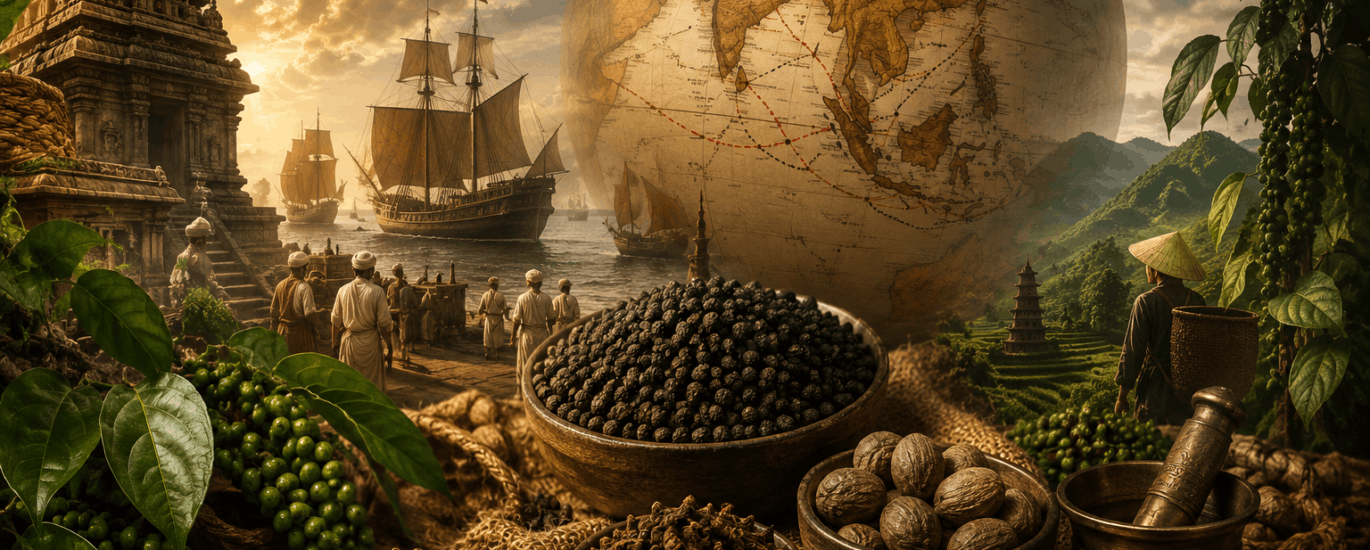
The Epic Journey of Pepper, Cloves & Nutmeg from the Malabar Coast across the Spice Islands of Indonesia to the Highlands of VietnamPROLOGUE: THE WORLD'S MOST COVETED CARGOImagine a world where a pocketful of dried berries could buy a house in Rome, where wars were waged over tiny volcanic islands, and the desire for flavour reshaped the map of the globe. This was the world of spices — and for over three millennia, at its very centre stood India.Kerala's Western Ghats …
History

FROM SEEDS TO SKYLINES – How the Accidental Discovery of Farming Built the World We Live In – A Journey Through 12,000 Years of Human History

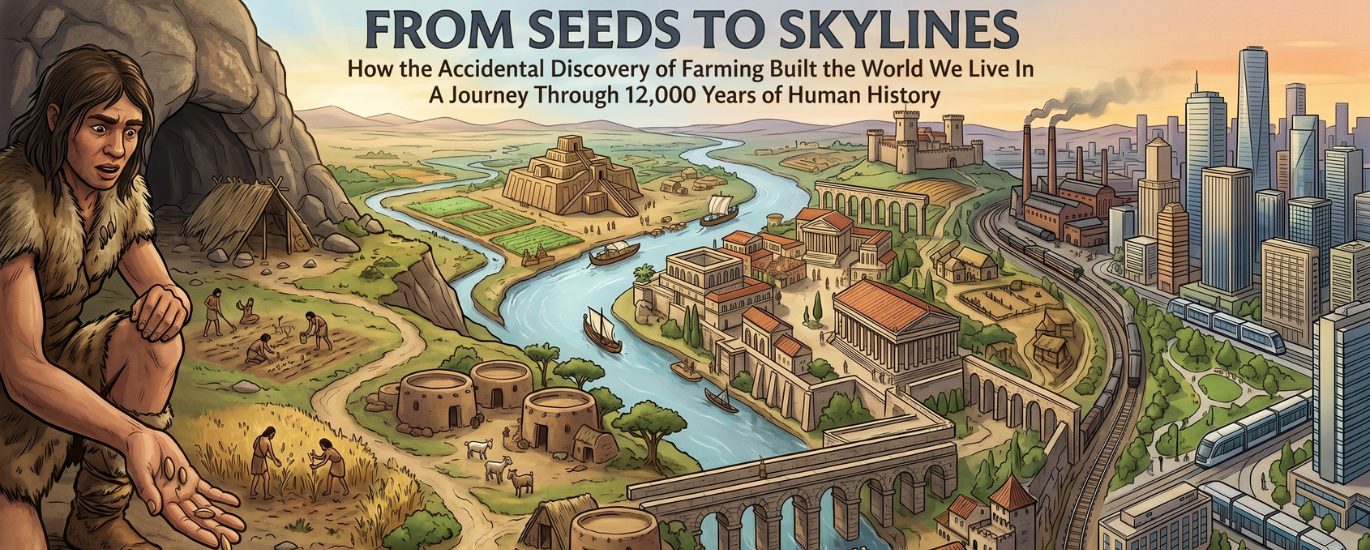
Imagine waking up every single morning with absolutely no idea where your next meal is coming from. No fridge, no market, no corner shop — just the vast, indifferent wilderness stretching out in every direction. You have no address, no home, and no plans beyond survival. This was not a nightmare. For the vast majority of human history, this was simply Tuesday.For roughly 95% of our time on Earth — about 300,000 years of Homo sapiens existence — every human …
Insights

Deodorants V/S Attars V/S Perfumes The Real Science Behind Fragrance, Longevity & Skin Performance

Walk into any pharmacy, fragrance counter, or online store, and the categories blur fast. Deodorant? Perfume? Attar? They all smell good — so are they really that different?The answer is: completely. Deodorants vs attars vs perfumes aren't just different products by name — they are built on different science, serve entirely different functions, and behave in fundamentally different ways on your skin. Understanding these differences isn't just trivia for fragrance enthusiasts. It's the reason your deodorant disappears by afternoon, your …
Market News

The Future of Agro Trading: How AI is Transforming Global Commodity Markets

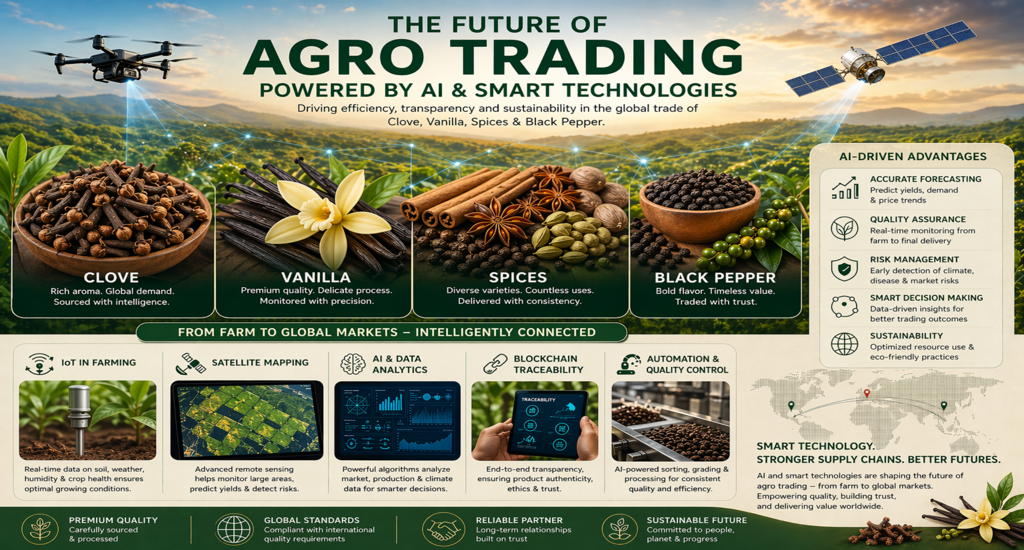
The global trade of high-value agricultural commodities such as clove, vanilla, spices, and black pepper has long been shaped by factors like climate conditions, regional expertise, and fluctuating market demand. These products are not only essential ingredients in culinary traditions worldwide but also play a significant role in pharmaceuticals, cosmetics, and food processing industries. However, the agro trading landscape for these commodities is becoming increasingly complex due to climate variability, supply chain inefficiencies, and rising demand for quality and traceability.In …
Insights

Why Spices Are Called Plant Poisons: The Science Behind Flavor, Defense, and Human Adaptation

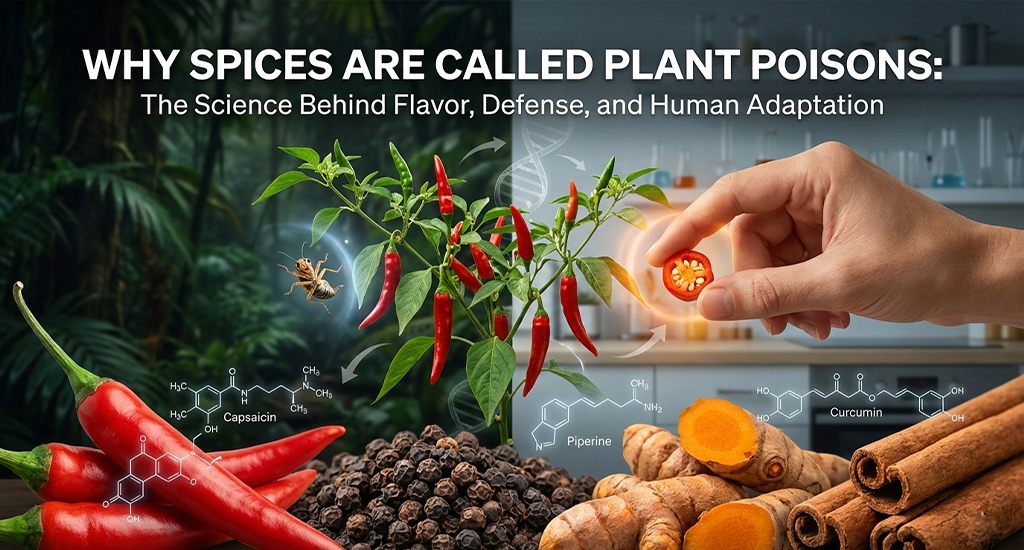
Spices are, in a biological sense, plant poisons. That may sound dramatic, but it is scientifically accurate. Plants cannot run, hide, or fight predators in the way animals can. Rooted to the ground, they evolved a different survival strategy: chemistry. Over hundreds of millions of years, plants developed complex molecules designed to deter microbes, insects, and grazing animals. These chemical compounds function as defense systems — antimicrobial agents, bitter deterrents, and pain-inducing irritants — all intended to prevent being eaten.And …
top