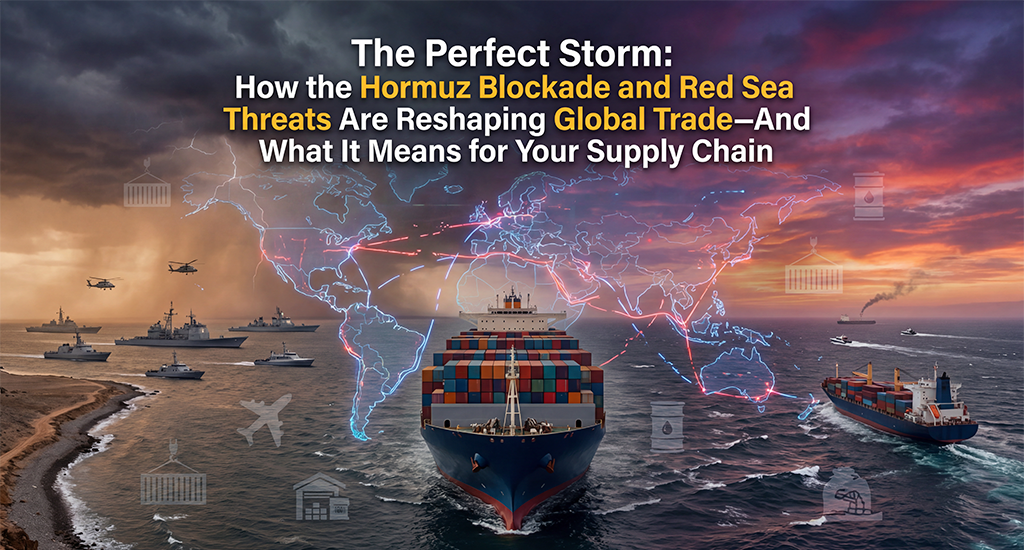
The global shipping lanes that carry your vanilla, spices, and agricultural commodities are under siege. The consequences are not just rising freight costs—they threaten the very foundations of international trade as we know it.
A Crisis Unlike Any Before
We are living through the largest disruption to global energy and maritime trade since the 1973 oil embargo. But this time, it’s not just about oil. It’s about everything that moves by sea.
On February 28, 2026, following coordinated U.S.-Israeli airstrikes on Iran, the Islamic Revolutionary Guard Corps declared the Strait of Hormuz effectively closed to international navigation. Within days, tanker traffic through this critical 21-mile-wide chokepoint plunged by more than 90 percent. Over 150 vessels anchored outside the strait, unable or unwilling to risk passage through waters now patrolled by Iranian drones and missiles.
Brent crude surged past $126 per barrel—the highest in years. But the shockwaves extended far beyond the oil markets.
Beyond Oil: The Container Crisis Nobody is Talking About
While global headlines focus on fuel prices and energy security, a quieter catastrophe is unfolding in the container shipping industry—one that directly affects agricultural exporters like us here at Robust Madagascar, and importers worldwide who depend on spices, vanilla, pulses, and essential oils.
The numbers are stark:
- 124 liner services include at least one Arabian Gulf port in their scheduled rotations
- More than 10% of the global container shipping fleet is now directly affected by the disruption
- Major shipping lines including CMA CGM and Hapag-Lloyd have imposed embargoes on key Gulf ports like Jebel Ali, Khalifa, and Dammam
- Over 1,000 containers remain stranded at Chittagong port alone, with hundreds more stuck at Middle Eastern transshipment hubs
The Strait of Hormuz carries far more than oil. It is the gateway for consumer goods, raw materials, agricultural products, petrochemicals, and polyethylene feedstocks flowing to the UAE, Qatar, Kuwait, and Bahrain—and from there, to the world.
A Glimmer of Hope: Dubai’s Strategic Pivot to Khor Fakkan
Amidst the chaos, there is one development offering some relief. Dubai has taken proactive steps to reroute shipments to Khor Fakkan port, a critical maneuver that has eased the situation slightly for regional trade.
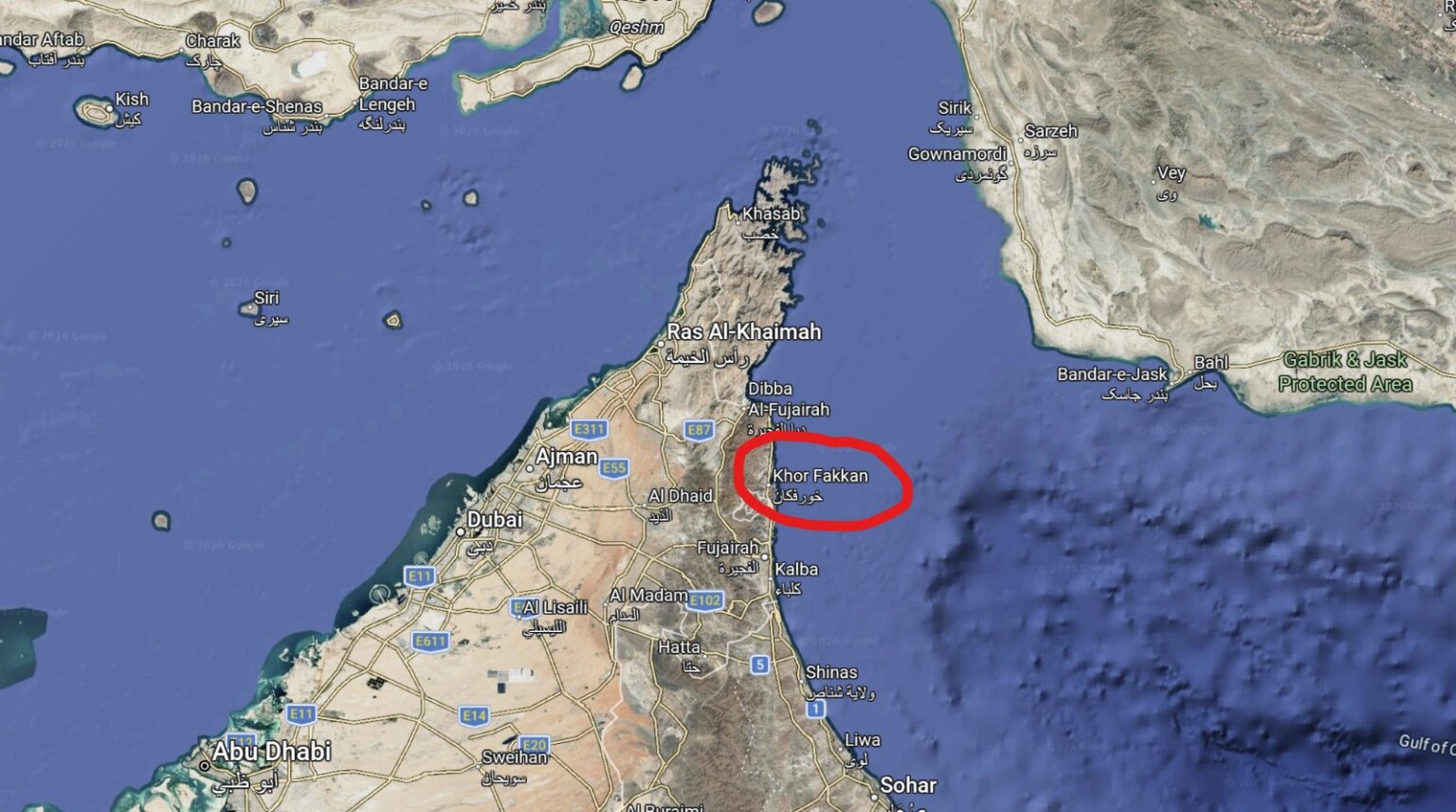 Khor Fakkan port (circled) sits on the Gulf of Oman coast—crucially positioned OUTSIDE the Strait of Hormuz, allowing vessels to bypass the blockade entirely.
Why Khor Fakkan Matters
Khor Fakkan is a deep-water port on the UAE’s east coast, facing the Gulf of Oman rather than the Persian Gulf. Its strategic significance lies in one critical fact: ships calling at Khor Fakkan do not need to transit the Strait of Hormuz.
This geographical advantage has transformed the port into a vital lifeline:
- Dubai Customs Notice No. 04/2026 established a formal “Green Corridor” between Oman and the UAE, with cargo cleared at Omani ports transported overland to the UAE via Al Wajajah and Hatta
- Maersk and other major carriers have adjusted operations to discharge cargo at alternative ports including Khor Fakkan, Salalah, Sohar, and Duqm
- Cargo is then transferred via feeder vessels or overland trucking into the Gulf region
- The system now operates in both directions, providing a formalized logistics framework that began as an improvised response
The Challenges Remain
However, this workaround is far from a complete solution:
- Khor Fakkan is experiencing severe congestion, with waiting times extending up to 10 days for berthing
- The port has had to open a marshalling yard 8 kilometers away to manage overflow
- War risk surcharges of $1,500 to $4,000 per container remain in effect
- The port is not accepting reefer (refrigerated) exports due to capacity constraints
- Even Khor Fakkan has not been immune to the conflict—on March 2, two UAVs struck a tanker offshore in UAE waters near Khor Fakkan
The rerouting through Khor Fakkan represents ingenuity under pressure, but it cannot fully substitute for the volume that normally flows through the Strait of Hormuz. It buys time; it does not solve the crisis.
The Houthi Factor: A Second Front Opens
As if the Hormuz crisis weren’t enough, the Red Sea—the world’s other critical maritime chokepoint—now faces renewed threats.
On March 28, 2026, Yemen’s Houthi rebels launched their first missiles at Israel since the war began, breaking months of relative calm. The implications for shipping are immediate and terrifying.
The Houthis proved their capabilities during 2024-2025, when their sustained campaign of attacks on commercial vessels forced a 90% decrease in container shipping through the Red Sea. Shipping companies were forced to reroute around the Cape of Good Hope, adding:
- 11,000 nautical miles to each voyage
- 10-14 additional days of transit time
- Over $1 million in extra fuel costs per trip
- Container shipping rates from Shanghai to Europe increased by 256%
The Bab el-Mandeb Strait, just 32 kilometers wide, is the gateway to the Suez Canal. Approximately 12% of global trade passes through this corridor, including oil, natural gas, grain, and everything from electronics to agricultural commodities.
With the Strait of Hormuz already effectively closed, the Red Sea has become even more critical. If the Houthis resume sustained attacks, the global shipping network will face simultaneous blockages at both of its most vital arterial routes.
What This Means for Agricultural Trade
At Robust Madagascar, we understand that our vanilla, cloves, black pepper, and essential oils travel thousands of miles before reaching your facilities. We’ve built our business on reliable, sustainable supply chains that connect Madagascar’s smallholder farmers to global markets.
The current crisis threatens this entire ecosystem:
Rising Freight Costs
Shipping lines have already implemented emergency surcharges reaching four-figure levels per container. War-risk insurance premiums have surged, and fuel surcharges compound daily as oil prices remain elevated.
Extended Transit Times
Even for routes not directly passing through conflict zones, the ripple effects are severe. Vessel redeployments, port congestion, and schedule disruptions mean your shipments may take weeks longer than anticipated.
Cold Chain Vulnerabilities
For temperature-sensitive agricultural products, extended transit times aren’t just inconvenient—they’re dangerous. Essential oils, certain spices, and perishable commodities require precise cold chain management. Disrupted schedules and port delays increase the risk of spoilage and quality degradation.
Container Shortages
As ships take longer routes and schedules collapse, container availability tightens dramatically. Empty containers aren’t where they need to be, creating export capacity constraints that ripple backward through supply chains.
The Long-Term Repercussions: A Warning
We must speak plainly: this crisis will not resolve quickly.
The Federal Reserve Bank of Dallas estimates that a one-quarter closure of the Strait of Hormuz would lower global GDP growth by an annualized 2.9 percentage points in Q2 2026. A disruption lasting three quarters could reduce global growth by 1.3 percentage points through year-end.
But the economic models may understate the true damage. Consider:
Structural Supply Chain Shifts
Companies are already accelerating diversification strategies, seeking to reduce dependence on Middle Eastern transit routes. This will reshape trade patterns for decades to come.
Inflation Pressures
Higher energy, fertilizer, and transport costs will increase food prices globally. The UNCTAD has warned of intensifying cost-of-living pressures, particularly for vulnerable populations and developing economies.
Investment Uncertainty
Qatar has already delayed its North Field East LNG expansion project. Other major infrastructure investments across the Gulf may follow. Uncertainty paralyzes long-term planning.
Cascading Industry Impacts
Polyethylene, aluminum, fertilizers, petrochemicals—approximately 85% of polyethylene exports from the Middle East transit the Strait of Hormuz. Shortages and backlogs will raise prices for packaging, automotive components, and consumer goods globally.
What Must Happen Now: A Call to Action
For importers, distributors, and manufacturers who rely on agricultural commodities from origins like Madagascar, the time for complacency has passed.
Reassess Your Supply Chain Exposure
Understand which of your suppliers and logistics routes are vulnerable to Middle Eastern chokepoints. Demand transparency from your partners.
Build Strategic Inventory
The companies that moved early during the 2024 Red Sea crisis came out ahead. Waiting until shortages materialize means competing for shrinking inventory at rising prices.
Diversify Your Sourcing
Work with suppliers who have demonstrated resilience and geographic flexibility. At Robust Madagascar, we have cultivated direct relationships with farmers and logistics partners across multiple collection points—Sambava, Tamatave, Mananara, Ambanja, and beyond—to ensure continuity.
Plan for Extended Timelines
Build buffer into your production schedules and sales campaigns. Assume that shipping will take longer and cost more for the foreseeable future.
Communicate with Stakeholders
Your customers, investors, and partners need to understand the macroeconomic forces reshaping global trade. Transparent communication builds trust during uncertain times.
Our Commitment to You
At Robust Madagascar, we’ve weathered supply chain disruptions before. We understand that our role extends beyond simply providing premium vanilla, spices, pulses, and essential oils. We are your partners in navigating a world of increasing complexity and risk.
Our commitments:
- Proactive communication on logistics conditions and lead times
- Flexible fulfillment strategies that adapt to changing shipping realities
- Quality assurance that protects your products regardless of transit conditions
- Fair pricing that reflects market realities while honoring our relationships
The storm we’re sailing through is fierce. But with preparation, partnership, and clear-eyed assessment of the challenges ahead, we can navigate it together.
For the latest updates on shipping conditions affecting your Madagascar-origin products, or to discuss your upcoming requirements, contact our team at info@robustmadagascar.com.
About Robust Madagascar
Since 2000, Robust Madagascar has specialized in sourcing premium food products from local smallholder farmers committed to sustainable agriculture. Our offerings—including vanilla, spices, essential oils, pulses, and edible nuts—hail from Madagascar’s diverse ecosystems. We are committed to quality, sustainability, and the communities we serve.