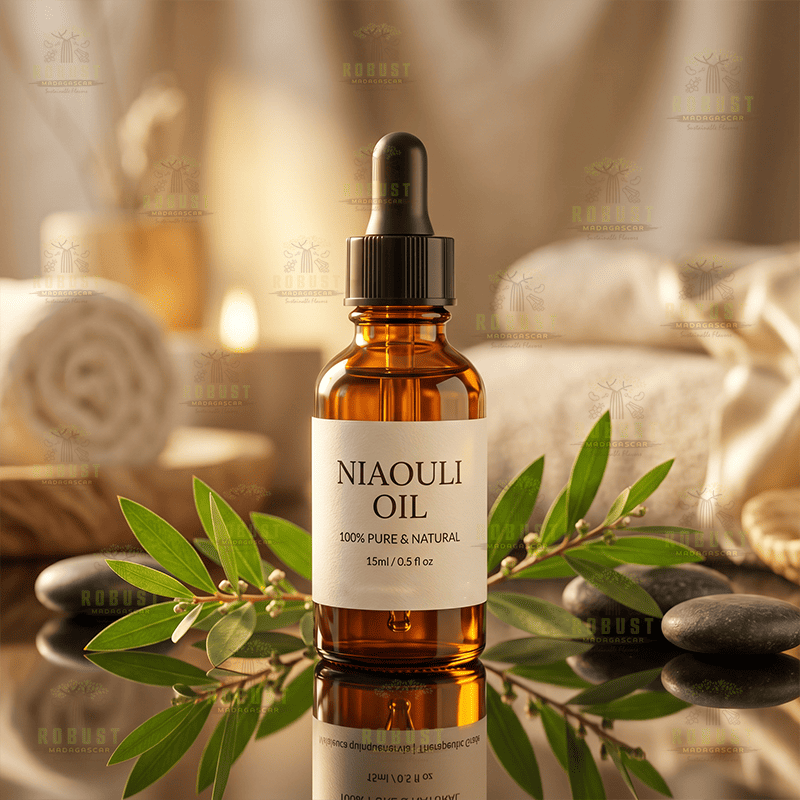
Niaouli Oil

Category:

Our Niaouli Oil is sourced from the eastern coastal region of Madagascar, where the humid tropical climate and rich biodiversity of the Melaleuca quinquenervia tree naturally favour the development of the prized cineole chemotype. Unlike oils from other origins, our Madagascar Niaouli carries a cleaner, more herbaceous character alongside its camphoraceous dominance — a distinction that experienced formulators recognize immediately. Wild-harvested from native stands with minimal processing, each batch retains the full aromatic integrity that makes Madagascar the benchmark origin for high-cineole Niaouli worldwide.

Description

Niaouli Essential Oil – The High-Cineole Standard of Madagascar

Our Niaouli Oil is wild-harvested and smallholder-grown from eastern Madagascar, where the tropical climate naturally produces the cineole-rich chemotype most valued by global formulators. Fresh leaves and stems are steam-distilled immediately after harvest to lock in volatile aromatic compounds, yielding a clean, vibrant oil free from rectification or adulteration.

Technical Profile & Purity:

  • Botanical Name: Melaleuca quinquenervia
  • Origin: Eastern Madagascar (Wild-Harvested)
  • Extraction Method: Steam Distillation (Leaves & Branches)
  • Appearance: Pale yellow to Yellow liquid
  • Odor: Fresh, herbaceous, camphoraceous with a slightly sweet note

Key Chemical Constituents (GC/MS Verified):

Based on our latest Chromatographic profile, our oil is chemically robust:

  • 1,8-Cineole / Eucalyptol (45% – 65%): The dominant active constituent responsible for the fresh, camphoraceous aroma and the oil’s well-known respiratory and antiseptic properties.
  • α-Pinene (5% – 15%): A bright, piney monoterpene that sharpens the top note and contributes antimicrobial depth to the overall profile.
  • Limonene (5% – 10%): Adds a clean citrus lift to the aroma, softening the medicinal edge with a subtle fruity freshness.
  • α-Terpineol (3% – 8%): A floral-lilac alcohol that rounds out the mid-note and supports the oil’s skin-conditioning character.

Quality Assurance:

Our Niaouli Oil is free from adulteration, synthetic cineole, and foreign carrier oils. Physical and chemical parameters are cross-checked against the supplier COA and our internal acceptance limits before release. Any batch failing critical parameters — cineole assay, acid value, clarity, or organoleptic check — is quarantined and not dispatched.

Applications of Niaouli Oil

  • Aromatherapy & Respiratory Wellness: Formulated into chest rubs, inhalation blends, steam therapies, and decongestant products. The high cineole content supports airway clarity and mucolytic action.
  • Cosmetics & Personal Care: Valued as an antiseptic, purifying active in lotions, toners, balms, and scalp treatments. Offers mild insect-repellent benefits in functional personal care.
  • Pharmaceutical Applications: Used as an expectorant and antiseptic component in topical pharmaceutical preparations, including chest balms and pain-relief formulations.
  • Fragrance & Flavors: Contributes a spicy-fresh, eucalyptus-like middle/top note to soaps, candles, mouthwash, toothpaste, and functional fragrances.
  • Household & Cleaning Products: Added to surface cleaners, sprays, and disinfectant products for its antimicrobial properties and clean, fresh scent.

How to Order Madagascar Niaouli Oil


For bulk supply and tailored solutions, contact us:

We offer global shipping and assist with sampling, pricing, COAs, and custom requests.
FAQs for Niaouli Oil

Why is Madagascar Niaouli Oil considered premium quality?

Madagascar produces the cineole chemotype of Melaleuca quinquenervia — the most commercially valued variety. The tropical eastern climate yields consistently high 1,8-Cineole levels (50–65%), and each batch is GC/MS verified. Our supply chain traces directly from wild-harvested trees to the distillery, ensuring authenticity and freshness.

What is the difference between Niaouli Oil and Eucalyptus Oil?

Both are high-cineole oils, but Niaouli has a more complex minor-constituent profile (including viridiflorol, limonene, and α-terpineol) giving it a softer, slightly sweeter aroma compared to eucalyptus. Niaouli is also generally considered gentler for skin applications and is used in cosmetics and pharmaceuticals where eucalyptus may be too harsh.

What is the botanical source of Niaouli Oil?

Niaouli Oil is steam-distilled from the leaves and young branches of Melaleuca quinquenervia (family Myrtaceae), wild-harvested from eastern Madagascar.

How is Niaouli Oil extracted?

Fresh plant material is steam-distilled immediately after harvest to preserve the volatile cineole-rich compounds. No chemical solvents or rectification are used, delivering a pure, whole essential oil.

What does Niaouli Oil smell like?

Niaouli Oil has a strong, fresh, camphoraceous aroma — herbaceous and slightly sweet, with clean medicinal notes. It is often described as a softer, more complex alternative to Eucalyptus.

What are the key chemical constituents of your Niaouli Oil?

Our GC/MS-verified profile confirms: • 1,8-Cineole (45–65%) – primary active, camphoraceous-fresh • α-Pinene (5–15%) – fresh, piney, adds brightness • Limonene (5–10%) – citrus undertone • α-Terpineol (3–8%) – floral, lilac-like • Viridiflorol (2.5–9%) – earthy, woody sesquiterpene marker

What industries use Niaouli Oil the most?

Niaouli Oil is widely used across: aromatherapy & respiratory wellness products, pharmaceutical topical formulations (chest rubs, expectorants), cosmetics & personal care (antiseptic lotions, scalp treatments), fine fragrance & household cleaning products.

Is Niaouli Oil safe for skin application?

Yes, when properly diluted. Always blend with a suitable carrier oil before topical use. Niaouli Oil contains naturally occurring EU-listed allergens (limonene, linalool, geraniol) which must be declared on finished cosmetic product labels when above threshold concentrations.

What is the shelf life of Niaouli Oil?

24–36 months from distillation when stored in airtight containers, away from heat, light, and moisture at 10–25°C. Nitrogen-flushed bulk packaging further extends stability.

Do you provide samples of Niaouli Oil?

Yes. Buyers may request samples by sharing their DHL or FedEx courier account number.

What is the minimum order quantity?

The MOQ is generally 1–2 kg for small buyers. Bulk orders are available under wholesale terms.

Do you supply Niaouli Oil in bulk?

Yes, we supply Niaouli Oil in bulk for fragrance houses, cosmetic manufacturers, and aromatherapy brands. Packaging options include 1 kg / 5 kg aluminum bottles, 25 kg epoxy-lined drums, and 50–180 kg stainless steel or HDPE drums.

What quality and testing certificates do you provide?

We provide: Certificate of Analysis (COA) with GC/MS data, physical-chemical test results (density, refractive index, optical rotation, acid value), pesticide residue and microbiological reports from internationally accredited laboratories.

What are your shipping terms?

We offer international shipping under FOB (Free on Board), C&F (Cost & Freight), and CIF (Cost, Insurance & Freight) terms. All shipments depart from Port of Toamasina (Tamatave), Madagascar, or Ivato International Airport.

What is the typical lead time?

Standard lead time is 2–3 weeks, depending on order volume and export documentation requirements.

Reviews

There are no reviews yet.

Be the first to review “Niaouli Oil”

Your email address will not be published. Required fields are marked *