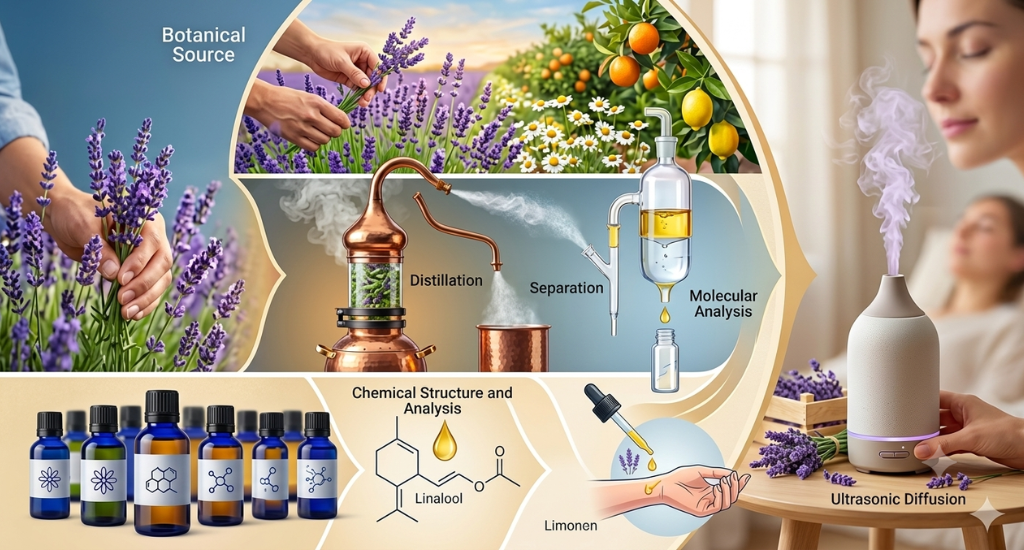
Walk into almost any wellness store, spa, or even a friend’s living room these days, and you’ll likely catch the scent of something aromatic drifting from a small diffuser in the corner — lavender, perhaps, or a bright wash of peppermint and eucalyptus. Essential oils have become a fixture of modern self-care, but most people using them have never asked the question that actually matters: what is an essential oil, and where does it come from?
At their core, essential oils are concentrated aromatic compounds extracted from plants — the volatile chemistry that gives a rose its scent, a peppermint leaf its bite, and a sprig of eucalyptus its sharp, medicinal clarity. These compounds are produced by plants for their own purposes (attracting pollinators, deterring pests, signaling stress) and humans have spent thousands of years figuring out how to capture them.
Did you know? It takes roughly 220 pounds of lavender flowers to produce just 1 pound of essential oil. That ratio is part of why high-quality oils carry the price tags they do — and why understanding production methods matters before you buy.
This concentration is also tied to volatility — essential oils evaporate readily at room temperature, which is precisely why they work so well in diffusers. The same molecular lightness that lets lavender oil fill a room with scent also means it breaks down or dissipates if mishandled, which has real implications for how you store and use it.
Volatility isn’t a single, uniform property either. Different aromatic molecules evaporate at different rates depending on their molecular weight and structure — light, small molecules like limonene (found in citrus oils) disperse almost immediately, while heavier molecules like those in sandalwood or vetiver linger for hours. This is the same principle perfumers rely on when building a fragrance with top, middle, and base notes, and it’s why a well-constructed diffuser blend can smell noticeably different ten minutes in than it did when you first switched the device on.
It’s also worth pausing on what an essential oil is not. It isn’t simply “the smell of a plant” bottled up — it’s a specific subset of that plant’s chemistry, isolated through a particular extraction process, and that process matters enormously. The same lavender plant can yield oils with meaningfully different characteristics depending on whether it was steam-distilled at high pressure for a short time or at lower pressure for longer. This is part of why two bottles labeled “lavender oil” can smell, and perform, quite differently.
This guide walks through the full journey of an essential oil: from the plant families that produce them, through the extraction methods that shape their character, to the quality testing that separates genuine therapeutic oils from diluted or synthetic imitations. We’ll also cover practical diffuser use, the health and wellness research behind common oils, and the sustainability questions every conscious consumer should be asking. By the end, you should be equipped to read a label critically, choose a diffuser intelligently, and build blends with some understanding of the chemistry behind them — rather than relying on guesswork or marketing language alone.
Botanical Sources & Raw Material Production

Not all essential oils are created equal, and a lot of that difference starts in the soil — literally. The plant family, growing conditions, and harvest timing all shape the final chemistry of an oil.
Key Plant Families & Their Oils
Lamiaceae (the mint family) is the workhorse of the essential oil world. This family gives us lavender (Lavandula angustifolia), prized for its calming linalool and linalyl acetate content, and peppermint (Mentha × piperita), valued for its high menthol concentration. Most Lamiaceae oils are steam-distilled from the leaves and flowering tops.
Rosaceae is home to one of the most labor-intensive oils in the industry: Rose Otto (Rosa damascena). Rose petals must be harvested at dawn, before the heat of the day causes volatile compounds to evaporate, and processed within hours of picking. This narrow harvest window — combined with the sheer volume of petals required — is why Rose Otto commands premium pricing.
Myrtaceae includes Eucalyptus globulus, rich in eucalyptol (1,8-cineole), the compound responsible for its sharp, camphorous aroma and its popularity in respiratory-support blends.
Rutaceae, the citrus family, behaves differently from the others. Citrus oils — lemon, orange, bergamot, grapefruit — are typically cold-pressed from the rind rather than steam-distilled, and the major growing regions span the Mediterranean basin and parts of the United States, particularly California and Florida.
Beyond these four major families, a handful of other plant groups produce oils with outsized importance in the industry. Burseraceae gives us frankincense and myrrh, both harvested as resin from trees native to arid regions of East Africa and the Arabian Peninsula. Santalaceae produces sandalwood, whose oil is concentrated in heartwood that takes decades to develop the right chemical density — one reason mature sandalwood trees are so valuable and so vulnerable to overharvesting. Poaceae, the grass family, contributes lemongrass, citronella, and vetiver, the latter extracted from a dense root system rather than leaves or flowers, giving it an unusually earthy, smoky character among diffuser oils.
Agricultural Considerations
The growing conditions behind an essential oil matter just as much as the species. A few factors worth understanding:
- Organic vs. conventional cultivation: Because distillation concentrates everything in the plant material — including pesticide residues — oils from conventionally farmed plants can carry a higher concentration of agricultural chemicals than the raw plant itself.
- Terroir factors: Soil pH, altitude, climate consistency, and surrounding biodiversity all influence the chemical profile of the essential oil, similar to how terroir affects wine.
- Wild-harvested species: Some of the most prized oils — frankincense, sandalwood, rosewood — are still partly wild-harvested, which raises sustainability questions we’ll return to in Section 8.
- Harvest timing: Beyond rose’s dawn-harvest requirement, many aromatic plants reach peak essential oil concentration at very specific points in their growth cycle — lavender, for instance, is typically harvested when roughly half its flowers have opened, balancing total yield against the oil’s chemical maturity.
- Post-harvest handling: The time between harvest and distillation matters too. Plant material left to sit too long before processing can lose volatile compounds or develop off-notes, which is why many distilleries are built close to, or even within, the fields they source from.
Distillation & Extraction Methods
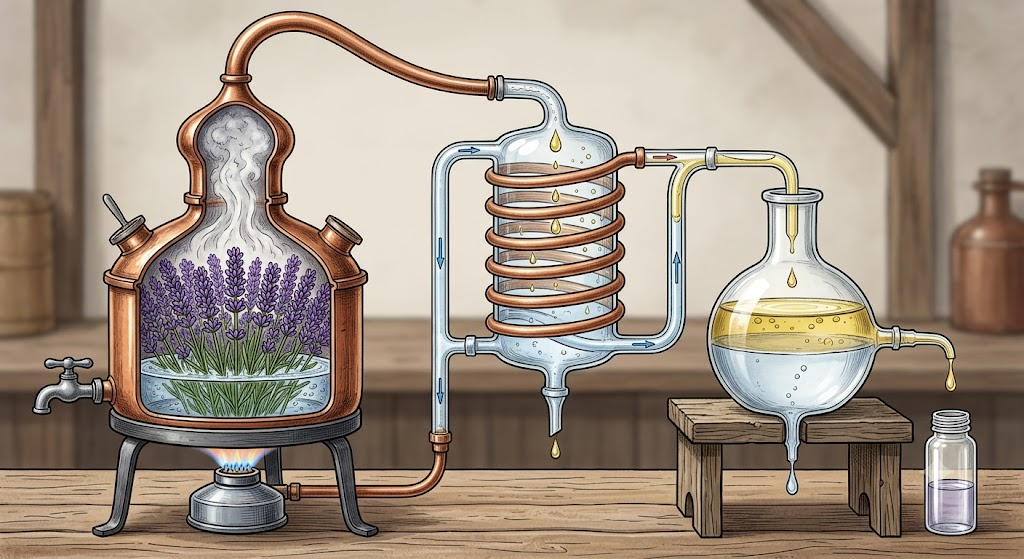
How an oil is extracted fundamentally determines its chemical makeup, aroma, and price point. Here’s a breakdown of the five major methods in commercial use today.
Steam Distillation — The Gold Standard
Steam distillation accounts for more than 93% of commercial essential oil production and is the method recognized by both ISO and AFNOR standards bodies.
How it works: Steam is passed through plant material, rupturing the cell walls that hold aromatic compounds. The resulting vapor — now carrying essential oil molecules — travels through a condenser, where it cools back into liquid form. Because oil and water don’t mix, the two separate naturally in a collection vessel called a Florentine flask, with the oil typically floating on top.
Several variables affect the outcome: distillation temperature, internal pressure, the duration of the steam exposure, and even the material the still is made from (copper stills are traditional and prized for certain reactions with sulfur compounds, while stainless steel is more common in modern, large-scale operations).
Distillers often talk about getting the “cut” right — deciding precisely when to start and stop collecting oil as it separates in the Florentine flask. The very first oil to come through a run can carry harsher, greener notes, while oil collected too late in the process may pick up unwanted heavier compounds or show signs of degradation from prolonged heat exposure. Skilled distillers adjust this cut based on decades of sensory experience as much as on instrumentation, which is part of why steam distillation, despite being centuries old, still has a meaningful artisanal dimension even in large commercial operations.
Byproduct worth knowing: The water left behind after distillation isn’t waste — it’s hydrosol, or floral water, which retains trace aromatic compounds and water-soluble plant constituents. Rose water and lavender water are both hydrosols, valued in skincare and even culinary applications.
Cold-Press Extraction (Expression)
This method is used almost exclusively for citrus oils — lemon, bergamot, sweet orange, grapefruit. Rather than using heat, machines mechanically press the rind to release oil glands, preserving a brighter, more “true-to-fruit” aromatic profile than distillation would.
Safety note: Cold-pressed citrus oils, particularly bergamot, contain naturally occurring furanocoumarins (such as bergapten) that are phototoxic. Applying these oils to skin before sun exposure can cause burns or pigmentation changes — a genuine safety consideration, not just marketing caution.
CO₂ Supercritical Fluid Extraction (SFE)
This is the most technologically advanced method in modern aromatics. Carbon dioxide is pressurized and heated until it reaches a “supercritical” state — above roughly 31.1°C and 73.8 bar — at which point it behaves as a powerful, tunable, non-polar solvent without actually being a liquid or a gas.
The advantage: CO₂ extraction captures a broader chemical spectrum than steam distillation, including heavier sesquiterpenes and plant waxes that steam often leaves behind, and it does so without leaving solvent residue. Extractors can also fine-tune the process by adjusting pressure and temperature to selectively pull different compound classes.
This method is favored for oils like ginger, frankincense, turmeric, hemp, and vanilla — and it typically costs 5 to 10 times more than steam-distilled equivalents, reflecting both the equipment investment and the more complete extraction.
Solvent Extraction & Enfleurage
Some flowers are simply too delicate for heat or pressure — jasmine, rose absolute, tuberose, and gardenia fall into this category. These require gentler approaches:
- Solvent extraction uses a chemical solvent (often hexane) to pull aromatic compounds from plant material, producing a waxy “concrete.” That concrete is then washed in ethanol to produce the final “absolute” — a highly concentrated, intensely fragrant product.
- Enfleurage is the historic method developed in Grasse, France, where flower petals are layered onto fat, which slowly absorbs their aromatic compounds over a period of weeks. It’s labor-intensive and largely artisanal today, but it remains the traditional gold standard for certain delicate florals.
Hydrodistillation & Water Distillation
A simpler, lower-cost variant of steam distillation, hydrodistillation submerges plant material directly in boiling water rather than passing steam through it. This method remains common in artisanal and small-scale production — notably for rose otto production in parts of Persia and India.
The trade-off: prolonged direct contact with boiling water increases the risk of ester hydrolysis, a chemical breakdown that can alter the final aroma and reduce the presence of delicate aromatic esters.
Quality Standards, Testing & Adulteration

With prices ranging from a few dollars to hundreds of dollars per ounce, essential oils are a frequent target for adulteration — diluting or stretching real oil with cheaper synthetic compounds or carrier substances. Knowing how oils are tested, and what red flags to watch for, protects both your wallet and your results.
Key Testing Methods
Method | What It Detects |
GC-MS (Gas Chromatography-Mass Spectrometry) | The gold standard; identifies and quantifies individual chemical constituents in an oil |
Optical Rotation | Can detect synthetic linalool used to adulterate lavender oil |
Refractive Index & Specific Gravity | Fast quality-control checks used to flag inconsistencies |
Organoleptic Evaluation | Expert sensory assessment — trained noses evaluating aroma authenticity |
Red Flags & Adulteration Warning Signs
A few practical signals that an oil may not be what it claims:
- Every oil in the line is priced the same. Genuine essential oils vary enormously in cost based on extraction difficulty and plant yield — rose and neroli should never cost the same as lavender or tea tree.
- No Latin botanical name on the label. Reputable brands list the scientific name (e.g., Lavandula angustifolia), since common names can refer to different species with very different chemistry.
- No stated country of origin. Traceability is a hallmark of quality sourcing.
- Labels that say “fragrance oil” or “perfume oil.” These terms indicate a synthetic product, not a therapeutic-grade essential oil — regardless of how naturalistic the marketing sounds.
- Prices dramatically below market average, especially for inherently expensive oils like rose or neroli, are a strong signal of dilution or substitution.
International Quality Standards
A handful of standards bodies help define what counts as a genuine, unadulterated oil:
- ISO Standards — for example, ISO 3515 sets acceptable chemical composition ranges specifically for lavender oil, giving a benchmark against which lab results can be compared.
- AFNOR — the French aromatherapy standard, widely referenced internationally, particularly in clinical and pharmaceutical-grade aromatherapy contexts.
- EOBBD-style labelling — transparent labelling practices that disclose full sourcing and testing information, allowing consumers to trace an oil back to its origin and verify its testing history.
Essential Oils in Diffusers
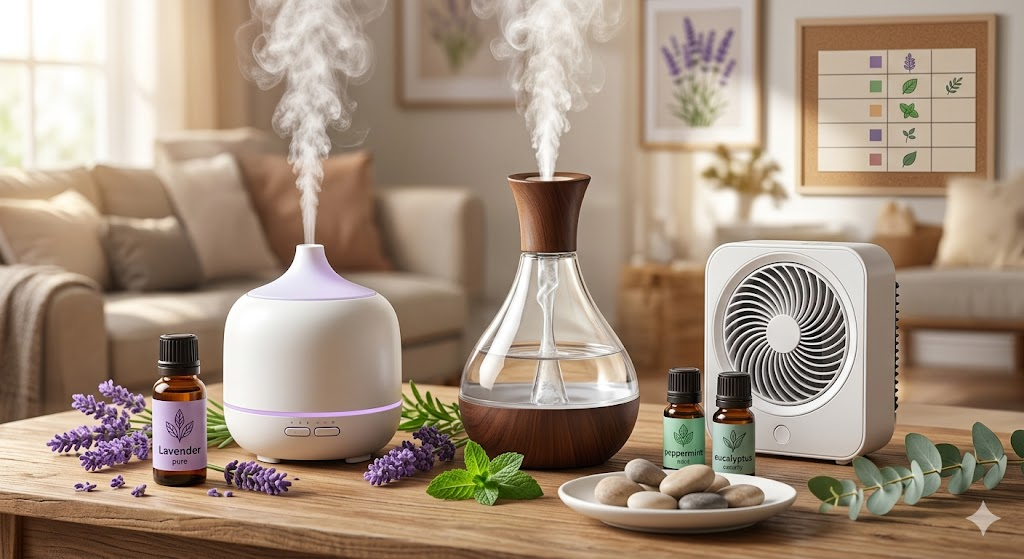
For most people, the diffuser is where the essential oil experience actually happens. But not all diffusers work the same way, and matching the right device to the right oil — and the right room — makes a meaningful difference.
Types of Diffusers
Ultrasonic / Humidifier diffusers are the most popular consumer option. They use ultrasonic vibrations to break a water-and-oil mixture into a fine cool mist, doubling as a light humidifier for the room.
Nebulizing diffusers are considered the most therapeutically potent option. They atomize pure, undiluted oil — no water involved — into a mist of extremely fine particles, often under 1 micron in size, allowing for more concentrated and consistent aromatic delivery.
Heat-based diffusers (candle or electric) are the most affordable and widely available, but the applied heat can degrade thermolabile (heat-sensitive) aromatic constituents, altering the oil’s profile and potentially reducing therapeutic value.
Reed diffusers are entirely passive — oil diluted in a carrier liquid is drawn up through reed sticks and released slowly into the air. They’re ideal for continuous, subtle ambient scent rather than concentrated aromatherapy.
Fan / evaporative diffusers work well in larger rooms, using airflow to speed evaporation. One quirk: lighter, more volatile compounds evaporate faster than heavier ones, which can shift the perceived aroma over time as a blend “dries down.”
Choosing between these isn’t just a matter of budget — it’s a matter of intent. Someone using oils for a quick mood lift while working at a desk may do perfectly well with an inexpensive fan diffuser running for twenty minutes. Someone pursuing more deliberate aromatherapy practice, where consistent particle size and undiluted oil concentration matter, will likely get more out of a nebulizing diffuser, even though it tends to use oil more quickly and carries a higher per-use cost.
Blending by Note Classification
Just like perfumery, essential oil blending relies on understanding how different oils evaporate at different rates:
Note Type | Evaporation Window | Example Oils | Role in Blend |
Top Notes | 20–30 minutes | Citrus, peppermint, eucalyptus, basil | First impression — bright, immediate |
Middle Notes | 30–60 minutes | Lavender, geranium, rosemary, chamomile | The “heart” of the blend |
Base Notes | Slow, long-lasting | Sandalwood, vetiver, frankincense, cedarwood | Anchors the scent, adds longevity |
A commonly recommended starting ratio is 30% top notes : 50% middle notes : 20% base notes, using roughly 3 to 8 drops per 100ml of water in an ultrasonic diffuser — though this can be adjusted to taste and room size.
Diffuser Safety Guidelines
A few practical guardrails for safe diffuser use:
- Limit continuous diffusion to 30–60 minutes, then allow a ventilation break before resuming.
- Keep diffusers away from pets, particularly cats and birds, which are notably sensitive to compounds in tea tree, eucalyptus, and citrus oils.
- Pregnant individuals should consult a healthcare practitioner before using essential oils therapeutically, as some oils are not recommended during pregnancy.
Health & Wellness Benefits
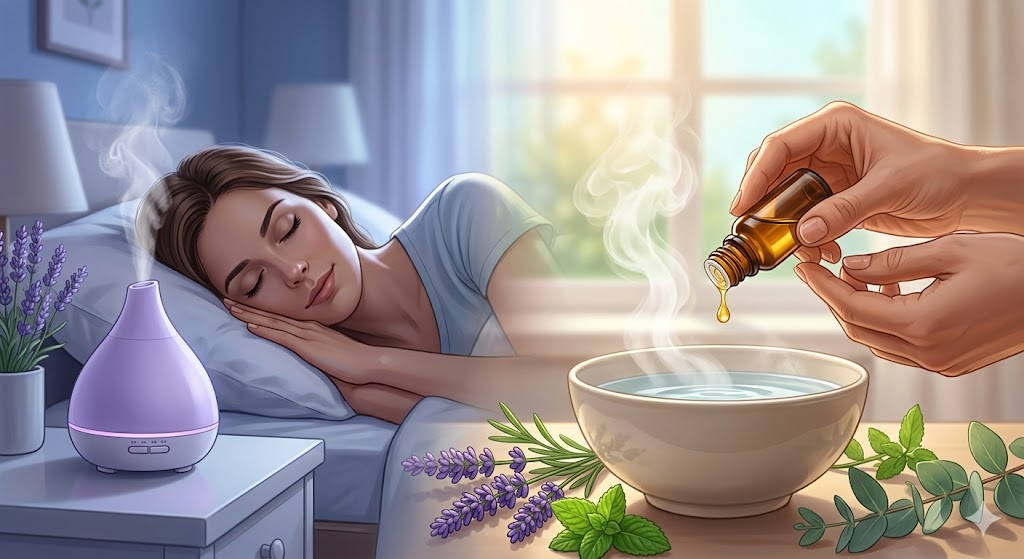
Aromatherapy research has grown substantially over the past two decades, though it’s worth noting that much of this evidence is preliminary or based on small studies — essential oils are best understood as a complementary wellness tool, not a replacement for medical care.
Mental & Emotional Wellbeing
Stress reduction: Lavender, bergamot, and clary sage are among the most studied oils for anxiolytic (anxiety-reducing) effects, with some research suggesting they may help lower cortisol levels.
Sleep support: Lavender and cedarwood have been the subject of multiple clinical studies examining improvements in subjective sleep quality, making them common choices for bedtime diffuser blends.
Mood enhancement: Sweet orange and bergamot are associated with activation of dopaminergic pathways in some research, which may explain their popularity in mood-lifting blends.
Cognitive performance: Rosemary, largely due to its 1,8-cineole content, has been studied for potential improvements in memory speed and accuracy in small trials.
Physical Wellness
Respiratory support: Eucalyptus, peppermint, and ravensara are commonly used for their expectorant and mild bronchodilating properties, particularly in steam inhalation or diffuser use during cold and flu season.
Immune modulation: Tea tree and frankincense are valued for antimicrobial properties and have been studied for potential immune-supporting effects.
Pain management: Peppermint, clove, and wintergreen contain natural analgesic compounds and are frequently used in topical blends (properly diluted) for minor aches.
Anti-inflammatory effects: German chamomile, helichrysum, and CO₂-extracted turmeric are among the oils most associated with anti-inflammatory research.
A note on evidence: Always look for peer-reviewed sources when evaluating health claims about essential oils, and treat dramatic or absolute claims with skepticism. Aromatherapy is generally supportive, not curative.
Quick-Reference Guide: Popular Essential Oils
Oil | Botanical Name | Extraction Method | Key Constituents | Primary Use |
Lavender | Lavandula angustifolia | Steam distillation | Linalool, linalyl acetate | Relaxation, sleep |
Peppermint | Mentha × piperita | Steam distillation | Menthol, menthone | Energy, digestion, headache relief |
Tea Tree | Melaleuca alternifolia | Steam distillation | Terpinen-4-ol | Antimicrobial, skin care |
Eucalyptus | Eucalyptus globulus | Steam distillation | 1,8-cineole (eucalyptol) | Respiratory support |
Bergamot | Citrus bergamia | Cold-press | Limonene, linalyl acetate | Mood, stress relief (caution: phototoxic) |
Frankincense | Boswellia carterii / sacra | Steam distillation / CO₂ | Boswellic acids, α-pinene | Grounding, skin support |
Rose Otto | Rosa damascena | Steam/hydrodistillation | Citronellol, geraniol | Emotional balance, skin care |
Ylang Ylang | Cananga odorata | Steam distillation | Linalool, geranyl acetate | Relaxation, mood |
Lemon | Citrus limon | Cold-press | Limonene | Uplift, cleaning, focus |
Cedarwood | Cedrus atlantica | Steam distillation | Cedrol, atlantone | Grounding, sleep support |
Sustainability & Ethical Sourcing
As demand for essential oils has grown globally, several key plant species have come under serious ecological pressure. Buying thoughtfully isn’t just an ethical nicety — for some species, it’s a matter of preventing extinction-level harvesting pressure.
At-Risk Species
- Indian Sandalwood (Santalum album) is CITES-listed due to overharvesting. Look for certified plantation-grown sources, primarily from Australia and Hawaii, rather than wild-harvested Indian stock.
- Rosewood (Aniba rosaeodora) is now critically endangered. Many aromatherapists recommend choosing naturally derived synthetic linalool or certified sustainable alternatives instead.
- Frankincense (Boswellia sacra) trees are vulnerable to over-tapping, which weakens and can kill mature trees. Seek suppliers who can document sustainable tapping practices.
- Atlas Cedarwood comes from protected Moroccan forests; verify that your source is plantation-grown rather than wild-harvested from these protected ecosystems.
Certifications to Look For
- USDA Organic / EU Organic — confirms pesticide-free cultivation practices
- Fairtrade / Fair for Life — verifies fair wages and community economic benefit for growers
- Rainforest Alliance — certifies sustainable agricultural practices
- B Corp Certification — signals company-wide ethical and environmental accountability, beyond just the raw material sourcing
Conclusion
Humans have been drawn to aromatic plants for millennia — from ancient Egyptian unguents to Persian rosewater to the steam-distillation techniques refined across centuries of Arab and European chemistry. What’s changed is the precision: modern CO₂ extraction and GC-MS testing have turned what was once an artisanal craft into a discipline that can be measured, verified, and held to genuine quality standards — without losing the plant-based wisdom that started it all.
The throughline from ancient distillation to modern supercritical extraction is really a story about getting closer to what a plant actually offers — more completely, more cleanly, and with fewer unknowns.
If you’re just getting started, the path forward is simple: begin with a basic ultrasonic diffuser, prioritize quality and transparency over price, and don’t hesitate to ask suppliers where their oils come from and how they’re tested. A little curiosity goes a long way toward separating genuine therapeutic-grade oils from the diluted or synthetic versions crowding store shelves.
As Paracelsus, the 16th-century physician often credited as a father of modern pharmacology, put it: “The art of healing comes from nature, not from the physician.” Essential oils are a small, fragrant reminder of how much of that wisdom still holds true.