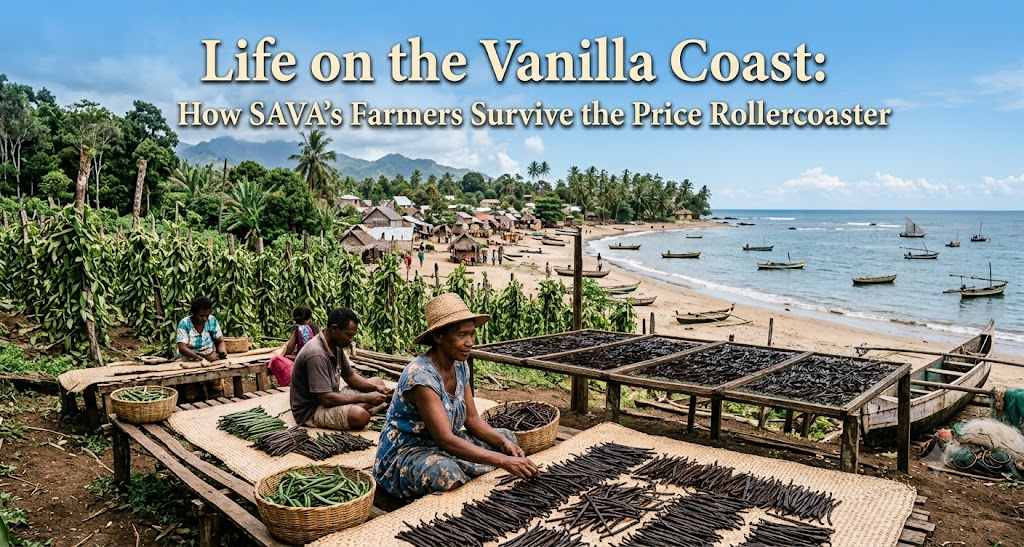
Along the northeastern edge of Madagascar, where the Indian Ocean meets dense rainforest and red earth, lies a region known simply by its acronym: SAVA. Named after the towns of Sambava, Antalaha, Vohemar, and Andapa, this humid corridor produces the majority of the world’s finest vanilla. It is often called the Vanilla Coast, and for good reason. The vines that climb along shade trees here yield pods that eventually become one of the most recognizable flavors on earth. Yet behind every jar of extract and every fragrant bean of Vanilla Madagascar lies a story of resilience that few outside the region ever hear. This is the story of the farmers who grow it, and how they survive a market that can swing from feast to famine within a single harvest season.
Understanding the Vanilla Coast and Why It Matters to the World
The SAVA region is not just another agricultural belt. It is the beating heart of the global vanilla trade, responsible for a dominant share of the world’s supply. The tropical climate, consistent rainfall, and volcanic soil create near-perfect conditions for the Vanilla planifolia orchid, the species behind what the world knows as Bourbon vanilla. Unlike synthetic vanillin, which is manufactured in laboratories, authentic Vanilla Madagascar carries the warmth, complexity, and natural sweetness that chefs, bakers, and perfumers prize above all substitutes.
What makes this region so important goes beyond flavor alone. Hundreds of thousands of families across SAVA depend directly or indirectly on vanilla cultivation for their livelihoods. Small plots of land, often just a few hectares, are passed down through generations, each family tending vines that require years of patient labor before they ever produce a single usable pod. When people reach for a bottle of vanilla extract or a bar of vanilla-scented soap, they are, in many cases, holding a product shaped by the hands of a farmer in Sambava or Antalaha who has spent a full year nurturing that harvest from flower to finished bean.
Companies like Robust Madagascar have built their entire operations around this reality, sourcing directly from these smallholder communities and working to ensure that the value created by Vanilla Madagascar flows back to the people who grow it, rather than being absorbed entirely by middlemen further down the supply chain.
The Long and Delicate Journey from Vine to Bean
Growing vanilla is unlike growing almost any other cash crop. It begins with planting cuttings of the vanilla vine, which then needs roughly three years of consistent care before it flowers for the first time. During this period, farmers must weed constantly, provide shade structures or living support trees, and protect young vines from pests, drought, and disease, all without any income from the crop itself.
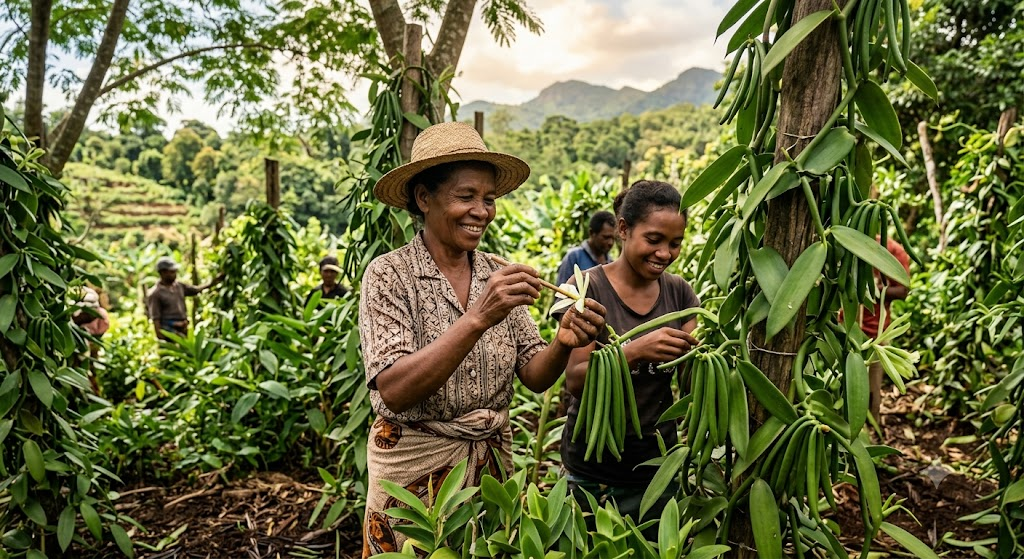
Once flowering begins, the real precision work starts. Each vanilla flower blooms for only a single day, and because the natural pollinators of this orchid are largely absent outside its native Mexico, every flower in Madagascar must be hand-pollinated using a small stick or thorn to transfer pollen between the flower’s reproductive parts. This has to happen within a narrow morning window, meaning farming families often rise before dawn during flowering season to walk their vines row by row, ensuring nothing is missed.
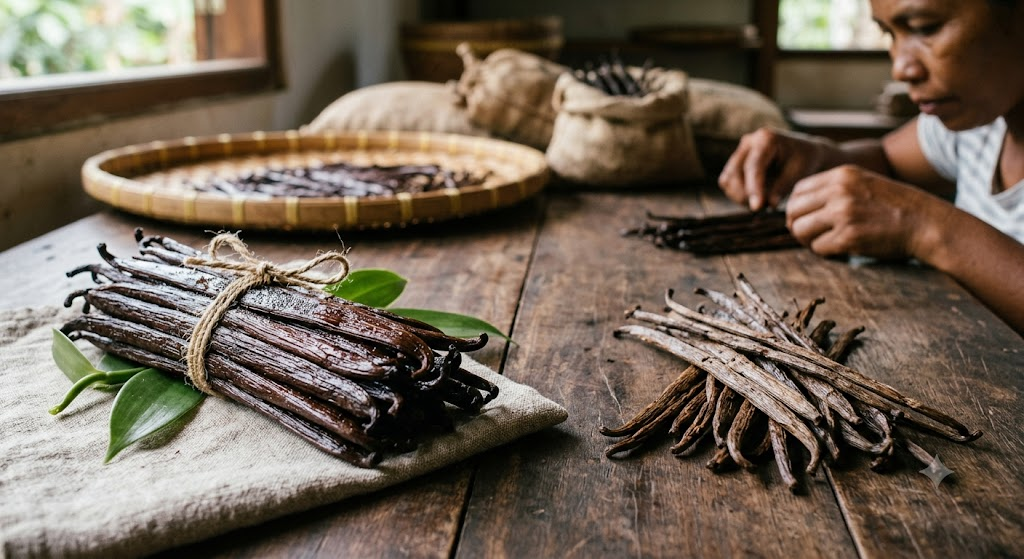
After successful pollination, the beans take between eight and nine months to reach maturity. Harvesting is done entirely by hand, with farmers judging ripeness based on subtle color changes at the tip of the pod. Picking too early results in thin, underdeveloped flavor, while waiting too long risks the pod splitting and losing value. Once harvested, the beans move through a demanding curing process that includes blanching in hot water, sweating under blankets to build heat and moisture, slow sun-drying over several weeks, and finally a resting period that can last months, before the beans are sorted by grade and length. This entire cycle, from planting to a market-ready bean, can take the better part of four years for a single vine to reach full productivity, and every subsequent harvest still demands this same painstaking annual labor.
It is worth pausing on this timeline, because it explains so much about why the market for Vanilla Madagascar behaves the way it does. A crop that cannot be rushed, mechanized, or quickly scaled up in response to demand is inherently vulnerable to dramatic price swings whenever supply and demand fall out of balance.
Why Vanilla Prices Swing So Wildly
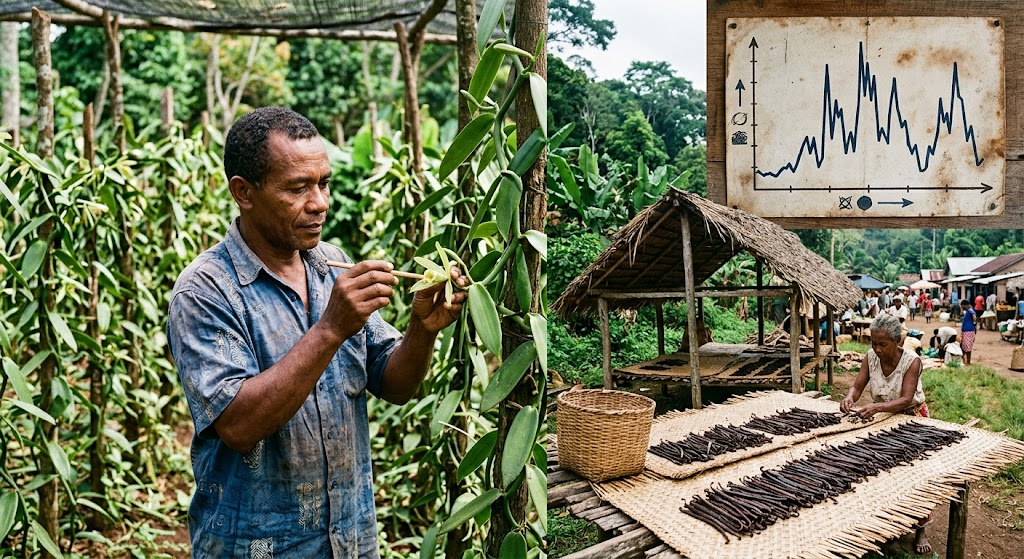
To understand life on the Vanilla Coast, you have to understand why prices for Vanilla Madagascar have historically resembled a rollercoaster more than a stable commodity chart. Several factors converge to create this volatility, and few other agricultural products experience such extreme price cycles.
- Weather dependency plays an outsized role, since the region sits directly in the path of the Indian Ocean cyclone belt, and a single major storm can flatten vines and wipe out a season’s harvest within hours.
- Global demand for natural vanilla has grown steadily as food and beverage brands shift away from synthetic vanillin toward “clean label” ingredients, meaning even modest supply disruptions can send prices soaring.
- The multi-year growing cycle means farmers cannot simply plant more vines in response to a price spike and expect quick relief; any expansion takes years to translate into additional harvestable beans.
- Speculation and stockpiling by traders further amplify price swings, as market participants attempt to anticipate shortages or gluts before they fully materialize.
- Currency fluctuations and export policy changes within Madagascar can also shift the effective price farmers receive, even when international prices remain steady.
The result has been a market where prices for premium beans have at various points climbed to several hundred dollars per kilogram during shortage years, only to collapse when a strong harvest coincides with softening demand. For a large exporter, this volatility is a manageable business risk. For a smallholder family whose entire annual income depends on a few kilograms of cured beans, it can mean the difference between prosperity and hardship from one season to the next.
Life on the Ground: How Farmers Experience the Boom Years
During the peak years, when Vanilla Madagascar commands premium prices on the international market, the transformation across SAVA villages is visible almost overnight. Farmers who sold their harvest for a strong price suddenly have capital they have never held before. New roofs appear on homes, motorbikes replace bicycles, and school fees that were once impossible to afford are paid in full, while small shops selling everyday goods spring up in villages that previously had none.
These boom periods, while genuinely beneficial, also introduce their own challenges. Sudden wealth in a region with limited formal banking infrastructure can be difficult to manage safely, and the temptation to spend on immediate needs rather than save for leaner years is understandable given how long families have gone without such income. Vanilla theft also becomes a serious concern during high-price years, with farmers sometimes sleeping in their fields overnight to protect ripening pods before the legal harvest date. Community patrol systems have emerged in some villages specifically to guard against this risk during the harvest window.
It is during these boom years that responsible buyers matter most. Organizations such as Robust Madagascar, which have built long-term relationships with farming communities rather than opportunistic one-season purchasing arrangements, tend to offer more transparent pricing and predictable payment terms, helping farmers plan rather than simply react to whatever the market happens to be doing that month.
Life on the Ground: How Farmers Experience the Bust Years
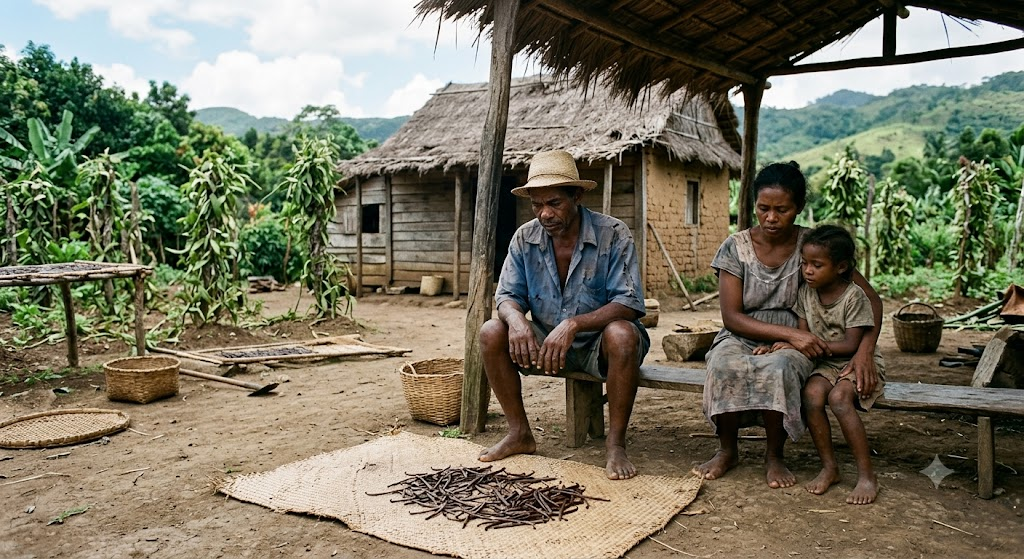
To understand life on the Vanilla Coast, you have to understand why prices for Vanilla Madagascar have historically resembled a rollercoaster more than a stable commodity chart. Several factors converge to create this volatility, and few other agricultural products experience such extreme price cycles.
- Weather dependency plays an outsized role, since the region sits directly in the path of the Indian Ocean cyclone belt, and a single major storm can flatten vines and wipe out a season’s harvest within hours.
- Global demand for natural vanilla has grown steadily as food and beverage brands shift away from synthetic vanillin toward “clean label” ingredients, meaning even modest supply disruptions can send prices soaring.
- The multi-year growing cycle means farmers cannot simply plant more vines in response to a price spike and expect quick relief; any expansion takes years to translate into additional harvestable beans.
- Speculation and stockpiling by traders further amplify price swings, as market participants attempt to anticipate shortages or gluts before they fully materialize.
- Currency fluctuations and export policy changes within Madagascar can also shift the effective price farmers receive, even when international prices remain steady.
The result has been a market where prices for premium beans have at various points climbed to several hundred dollars per kilogram during shortage years, only to collapse when a strong harvest coincides with softening demand. For a large exporter, this volatility is a manageable business risk. For a smallholder family whose entire annual income depends on a few kilograms of cured beans, it can mean the difference between prosperity and hardship from one season to the next.
Life on the Ground: How Farmers Experience the Boom Years
During the peak years, when Vanilla Madagascar commands premium prices on the international market, the transformation across SAVA villages is visible almost overnight. Farmers who sold their harvest for a strong price suddenly have capital they have never held before. New roofs appear on homes, motorbikes replace bicycles, and school fees that were once impossible to afford are paid in full, while small shops selling everyday goods spring up in villages that previously had none.
These boom periods, while genuinely beneficial, also introduce their own challenges. Sudden wealth in a region with limited formal banking infrastructure can be difficult to manage safely, and the temptation to spend on immediate needs rather than save for leaner years is understandable given how long families have gone without such income. Vanilla theft also becomes a serious concern during high-price years, with farmers sometimes sleeping in their fields overnight to protect ripening pods before the legal harvest date. Community patrol systems have emerged in some villages specifically to guard against this risk during the harvest window.
It is during these boom years that responsible buyers matter most. Organizations such as Robust Madagascar, which have built long-term relationships with farming communities rather than opportunistic one-season purchasing arrangements, tend to offer more transparent pricing and predictable payment terms, helping farmers plan rather than simply react to whatever the market happens to be doing that month.
Life on the Ground: How Farmers Experience the Bust Years
To understand life on the Vanilla Coast, you have to understand why prices for Vanilla Madagascar have historically resembled a rollercoaster more than a stable commodity chart. Several factors converge to create this volatility, and few other agricultural products experience such extreme price cycles.
- Weather dependency plays an outsized role, since the region sits directly in the path of the Indian Ocean cyclone belt, and a single major storm can flatten vines and wipe out a season’s harvest within hours.
- Global demand for natural vanilla has grown steadily as food and beverage brands shift away from synthetic vanillin toward “clean label” ingredients, meaning even modest supply disruptions can send prices soaring.
- The multi-year growing cycle means farmers cannot simply plant more vines in response to a price spike and expect quick relief; any expansion takes years to translate into additional harvestable beans.
- Speculation and stockpiling by traders further amplify price swings, as market participants attempt to anticipate shortages or gluts before they fully materialize.
- Currency fluctuations and export policy changes within Madagascar can also shift the effective price farmers receive, even when international prices remain steady.
The result has been a market where prices for premium beans have at various points climbed to several hundred dollars per kilogram during shortage years, only to collapse when a strong harvest coincides with softening demand. For a large exporter, this volatility is a manageable business risk. For a smallholder family whose entire annual income depends on a few kilograms of cured beans, it can mean the difference between prosperity and hardship from one season to the next.
Life on the Ground: How Farmers Experience the Boom Years
During the peak years, when Vanilla Madagascar commands premium prices on the international market, the transformation across SAVA villages is visible almost overnight. Farmers who sold their harvest for a strong price suddenly have capital they have never held before. New roofs appear on homes, motorbikes replace bicycles, and school fees that were once impossible to afford are paid in full, while small shops selling everyday goods spring up in villages that previously had none.
These boom periods, while genuinely beneficial, also introduce their own challenges. Sudden wealth in a region with limited formal banking infrastructure can be difficult to manage safely, and the temptation to spend on immediate needs rather than save for leaner years is understandable given how long families have gone without such income. Vanilla theft also becomes a serious concern during high-price years, with farmers sometimes sleeping in their fields overnight to protect ripening pods before the legal harvest date. Community patrol systems have emerged in some villages specifically to guard against this risk during the harvest window.
It is during these boom years that responsible buyers matter most. Organizations such as Robust Madagascar, which have built long-term relationships with farming communities rather than opportunistic one-season purchasing arrangements, tend to offer more transparent pricing and predictable payment terms, helping farmers plan rather than simply react to whatever the market happens to be doing that month.
Life on the Ground: How Farmers Experience the Bust Years
Looking ahead, several trends are likely to shape life on the Vanilla Coast in the coming years. Global demand for natural, traceable ingredients continues to grow, driven by consumer preference for transparency over synthetic alternatives, which should continue to support healthy long-term demand for authentic vanilla from Madagascar. At the same time, greater awareness among international buyers about the volatility farmers face is gradually pushing more of the industry toward longer-term contracts, pre-financing arrangements, and direct trade relationships that smooth out some of the worst effects of the price rollercoaster.
Technology, though still limited in reach across rural SAVA, is beginning to play a role as well. Mobile payment systems are making it easier for farmers to receive and manage income securely, reducing the risks associated with holding large amounts of cash after a good harvest. Improved communication networks are also helping farmers access more accurate, real-time pricing information, reducing dependence on middlemen who might otherwise take advantage of information gaps.
Ultimately, though, the fundamentals of vanilla cultivation are unlikely to change. It will remain a labor-intensive, multi-year commitment that cannot be rushed or mechanized without losing the very qualities that make Vanilla Madagascar so prized in the first place. The farmers of SAVA will continue hand-pollinating flowers before sunrise, guarding ripening pods through harvest season, and patiently curing beans over weeks of sun and shade. What can change, and what companies like Robust Madagascar are actively working toward, is building a trading relationship around that labor that treats farmers as long-term partners rather than interchangeable suppliers, offering the kind of stability that no amount of market speculation can provide on its own.
Conclusion: Resilience at the Root of Every Bean
Life on the Vanilla Coast is defined by a paradox. The region produces one of the most luxurious, sought-after ingredients in the world, yet the people responsible for that production live with a level of economic uncertainty that would be unthinkable in most other industries. Every jar of extract, every fragrant pod, and every dessert made with genuine Vanilla Madagascar carries within it years of patient labor and a willingness to weather storms, both literal and financial.
Understanding this reality changes the way the product itself can be appreciated. It is not simply a flavoring; it is the result of an entire ecosystem of human resilience, generational knowledge, and careful stewardship of land that has provided for the families of SAVA for centuries. As global demand continues to grow, the companies that succeed in this space will likely be those that recognize, as Robust Madagascar does, that the health of the vanilla trade and the wellbeing of the farmers who sustain it are ultimately the same story, told from two points along the same supply chain.
Robust Madagascar sources premium Vanilla Madagascar and other spices directly from smallholder farmers in Madagascar’s SAVA region, supporting sustainable agriculture and fair, transparent trade practices across the supply chain.